
Are you dreaming of a new kitchen that perfectly fits your space and lifestyle? Before you can start picking out cabinets, countertops, or appliances, there's a crucial first step you can’t overlook: measuring your kitchen space accurately.
Getting these measurements right is essential to avoid costly mistakes and ensure a seamless fit for your design ideas. In this guide, you'll discover simple, yet effective, techniques to measure your kitchen like a pro. Imagine the confidence you'll feel knowing every inch of your kitchen is accounted for, paving the way for a flawless renovation.
Dive in to learn how to transform your kitchen dreams into reality with the precision of a seasoned designer. Your perfect kitchen awaits, and it all starts with a tape measure in hand.
Importance Of Accurate Measurements
Accurate measurements are the foundation of successful kitchen design. Imagine investing in beautiful cabinetry or sleek appliances, only to find they don’t fit into your space. The repercussions of inaccurate measurements can be costly and frustrating. Ensuring precise dimensions not only saves time and money but also guarantees a harmonious and functional kitchen.
Every inch counts in a kitchen. If your new refrigerator doesn’t fit into its designated space, you'll face a logistical nightmare. It's not just about fitting things into your kitchen; it’s about ensuring everything works together seamlessly. Accurate measurements help avoid these costly errors.
Think about your daily routine. You want your kitchen layout to support your cooking and cleaning activities without unnecessary obstacles. Precise measurements ensure that pathways are clear and appliances are accessible. This contributes to a more efficient and enjoyable kitchen experience.
How To Take Measurements Correctly
Use a reliable tape measure. A flimsy one might give you wrong readings. Measure twice to make sure your figures are correct. It might seem tedious, but double-checking can save you from making costly mistakes.
Start by measuring the width, height, and depth of your space. Don’t forget to account for door swings and drawer extensions. These small details can make a big difference in how your kitchen functions.
Consider all elements, including windows, outlets, and plumbing. You don’t want to realize later that you’ve overlooked a crucial detail. A comprehensive approach will ensure you’ve covered everything necessary.
Common Mistakes To Avoid
Don’t rely on memory. Always jot down your measurements immediately. It’s easy to mix up numbers if you don’t record them right away. This simple step can prevent confusion later.
Avoid estimating. Precision is key. Guessing can lead to appliances and furniture not fitting correctly, leading to frustration and additional costs. Always measure and then measure again.
Skipping irregular spaces is a mistake. Even small nooks can be utilized effectively. Accurately measuring these spaces can lead to innovative storage solutions or design features.
Tools That Make Measurement Easier
Invest in a digital laser measurer. These tools provide quick and accurate readings, which can be especially helpful for larger spaces. They are user-friendly and can save you time.
Smartphone apps can be surprisingly effective for measuring. Many have built-in features to help ensure precision. These apps are handy when you need to measure on the go.
Don’t forget about level tools. They ensure your measurements are straight and accurate, especially useful when installing cabinetry or shelving. It’s a small tool with a big impact.
Accurate measurements empower you to make informed decisions. They ensure your kitchen is both functional and aesthetically pleasing. So, why not measure carefully and transform your kitchen into a space you love?

Credit: www.youtube.com
Tools Needed For Measuring
Accurate kitchen design requires essential measuring tools like tape measures, spirit levels, and laser measures. These tools ensure precise dimensions for cabinets, countertops, and appliances. Proper measurement avoids costly mistakes and ensures a functional kitchen layout.
To achieve a perfect kitchen design, accurate measurements are crucial. Proper tools ensure precision, helping to avoid costly mistakes. Whether updating cabinets or installing new appliances, having the right equipment is key. This guide explores essential and advanced tools for precise kitchen measurements.
Essential Measuring Tools
A tape measure is vital for any kitchen project. It's simple yet effective. A 25-foot tape is versatile for most tasks. Also, a sturdy ruler or yardstick is handy for smaller items. Ensure it's straight and easy to read. A carpenter's pencil helps mark measurements clearly. Use it on walls or floors without leaving permanent marks. Lastly, graph paper assists in planning layouts. It helps visualize the kitchen space accurately.
Advanced Measuring Equipment
For more complex designs, laser measuring tools are beneficial. They offer quick, precise readings over long distances. Digital calipers measure thickness and depth with accuracy. They are useful for custom cabinetry or appliance fitting. A spirit level ensures surfaces are even. It prevents future installation issues. Finally, a stud finder helps locate wall studs. Essential for hanging heavy kitchen fixtures securely.
Preparing The Kitchen Space
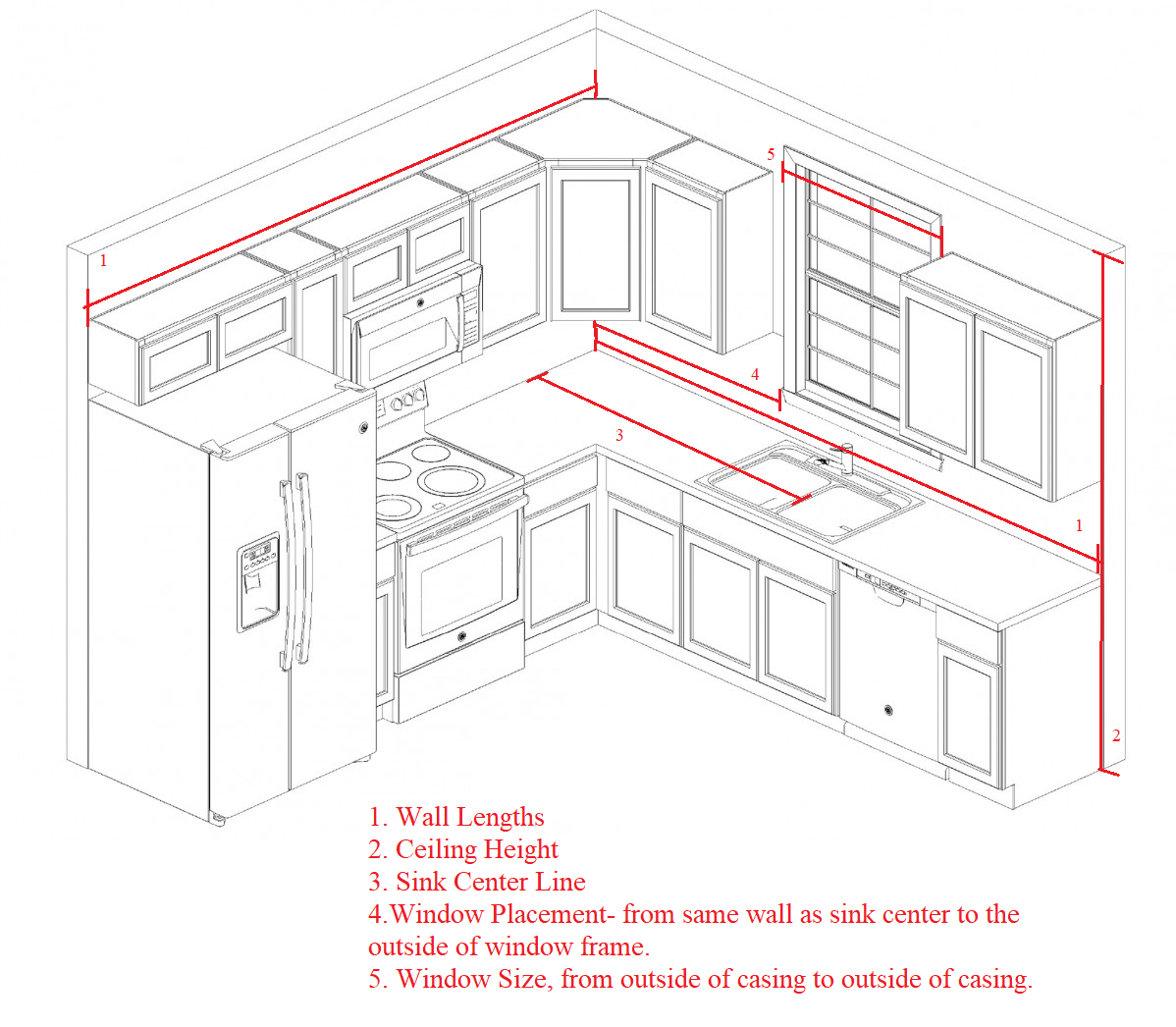
Creating an efficient kitchen starts with accurate measurements. Begin by measuring the room's height, width, and length. Then, identify fixed elements like doors and windows to ensure a well-planned layout.
Preparing your kitchen space is an essential step in designing the perfect kitchen. Proper preparation ensures accurate measurements and a functional layout. This process involves organizing the area and identifying key zones. Each step plays a crucial role in achieving a seamless kitchen design.
Clearing The Area
Start by removing all clutter from the kitchen. Clear counters and empty cabinets. Shift furniture or appliances blocking the view. This helps you see the true space available. A clean area leads to precise measurements. Make sure to clean the floor and walls. This allows you to inspect for any repairs needed.
Identifying Key Zones
Recognize areas where major activities occur. Cooking, cleaning, and food storage are essential zones. Measure these spaces with attention to detail. Consider the placement of appliances like the refrigerator and stove. Identify zones for preparation and dining. This helps in planning an efficient layout. Knowing these zones aids in creating a harmonious kitchen.
Step-by-step Measuring Guide
Embarking on a kitchen redesign journey requires precise measurements to ensure every component fits seamlessly. A step-by-step measuring guide is essential for creating a functional and stylish kitchen. Whether you're a DIY enthusiast or collaborating with a professional, accurate measurements can make all the difference.
Measuring Walls And Corners
Start by measuring the length of each wall from one corner to the other. Use a tape measure and jot down the numbers in a notebook or digital device. Double-check your measurements to avoid errors.
Consider any openings, windows, or doors you encounter. Note their positions and dimensions on your plan. This information is crucial when designing cabinetry and ensuring a smooth flow.
Calculating Ceiling Height
Ceiling height impacts cabinet choices and overall kitchen aesthetics. Measure from the floor to the ceiling at multiple points in the room. Houses can have uneven floors or ceilings, so it's wise to check in several spots.
Record the highest and lowest measurements. This helps in deciding on cabinet heights and whether to use bulkheads. If you're working with a professional, they'll appreciate the detailed info.
Determining Countertop Space
Countertop space is vital for meal prep and daily activities. Measure the length and width of existing countertops if they’re staying in the same place. If planning a new layout, visualize where you’ll need the most space.
Think about your cooking habits. Do you love baking? You might need more countertop near the oven. Tailoring your kitchen to your lifestyle can enhance efficiency.
Assessing Appliance Areas
Appliances dictate the layout and flow of your kitchen. Measure the space allocated for the fridge, stove, and dishwasher. Allow for some breathing room to ease installation and maintenance.
Consider future appliance upgrades. Will you need a bigger fridge soon? Plan ahead to avoid costly redesigns. What appliance do you use most often? Prioritize its placement for easy access.
With each measurement, visualize how you move and work in your kitchen. Does everything feel accessible and intuitive? Accurate measurements combined with thoughtful design will create a kitchen that meets your needs and style preferences.
Considering Plumbing And Electrical Points
Creating the perfect kitchen involves more than just choosing cabinets and countertops. Considering plumbing and electrical points is crucial in kitchen design. Proper planning ensures that your kitchen functions well and safely. It also helps you avoid costly mistakes. Let's explore how to measure and plan these important elements.
Locating Existing Fixtures
Start by identifying the location of current plumbing and electrical fixtures. This includes sinks, dishwashers, outlets, and light switches. Use a measuring tape to note their exact positions. Accurate measurements are key. This helps in visualizing your new kitchen layout.
Mark these points on a kitchen floor plan. This will serve as a guide for your design. Knowing these positions prevents unnecessary alterations. It also saves time and money during renovation.
Planning For New Installations
Think about where you want to add new appliances or fixtures. Consider the practicality of their locations. For example, a dishwasher should be near the sink. Outlets should be accessible for all kitchen gadgets.
Ensure enough space for new electrical points. This prevents overcrowding and ensures safety. Consult a professional if needed. They can provide insight into the best placements.
Plan for future needs. You may want more appliances later. Leave room for these possibilities in your design.
Credit: www.qualitygranitenh.com
Understanding Cabinet Dimensions
Measuring kitchen cabinets is essential for creating a functional space. Start by recording the width, depth, and height of each unit. Accurate dimensions ensure a seamless fit and maximize your kitchen design potential.
Designing a kitchen begins with understanding cabinet dimensions. These dimensions are crucial for a functional and aesthetically pleasing space. When you know the right measurements, you can maximize storage and ensure a smooth workflow.
Standard Cabinet Sizes
Most kitchens feature cabinets in standard sizes. Base cabinets are typically 24 inches deep and 34.5 inches high, designed to accommodate a standard countertop height of 36 inches. Wall cabinets often come in heights of 12, 15, 18, 24, 30, 36, or 42 inches, and they are usually 12 inches deep. You might wonder why these sizes are standard. They are designed to fit most kitchen layouts and appliances. A friend once redesigned her kitchen only to discover her dishwasher wouldn’t fit because the base cabinets were non-standard. Knowing these sizes helps you avoid such pitfalls. When measuring your kitchen, always keep these standard dimensions in mind.
Custom Cabinet Options
Custom cabinets offer flexibility beyond standard sizes. They allow you to tailor your kitchen to your specific needs and aesthetic preferences. If you have an unusually shaped kitchen or unique storage needs, custom cabinets can be a game-changer. Consider a situation where you have a kitchen with sloped ceilings. Standard cabinets might not fit, but custom options can maximize your space without compromising on style. While custom cabinets can be more expensive, they offer solutions that standard cabinets cannot. They can turn awkward corners into useful storage areas or add a personal touch to your design. Have you thought about what specific needs or features you’d like in your kitchen? Custom cabinets might just be the answer to achieving your dream kitchen layout.
Incorporating Ergonomics
Designing a kitchen involves considering ergonomic principles. Ensure comfortable heights for counters and shelves. Keep frequently used items within easy reach. Proper spacing between appliances and workspaces can enhance efficiency and reduce strain.
Designing a kitchen isn't just about choosing the right appliances or the perfect color palette. It's about creating a space where you can move comfortably and efficiently. Ergonomics plays a vital role in this process. It ensures that your kitchen is not only aesthetically pleasing but also functional and comfortable to use. Let's dive into how you can measure your kitchen to incorporate ergonomics effectively.
Optimal Height And Reach
Think about how often you use your kitchen counters and cabinets. The height and reach can make or break your cooking experience. If the counters are too high, you might strain your arms and shoulders. Too low, and you risk back pain. Measure your countertop height with your comfort in mind. A good rule of thumb is to have them level with your elbows when you're standing. This minimizes the need for bending or stretching. Cabinet placement is equally important. Store frequently used items within easy reach. Imagine reaching for a cup without standing on tiptoes or bending too much. It's all about creating a flow that feels natural to you.
Ensuring Easy Movement
Have you ever been frustrated trying to navigate a cramped kitchen while cooking? The layout should allow you to move freely and safely. Consider the "kitchen triangle" – the distance between the sink, stove, and refrigerator. Measure the space between these key areas. Ideally, each leg of the triangle should be between 4 and 9 feet. This allows you to move efficiently without unnecessary steps. Think about the pathways between other areas. Is there enough room to open the fridge and the oven at the same time? Do you have to sidestep around the dishwasher? Ensuring easy movement is key to a stress-free cooking experience. Incorporating ergonomics into your kitchen design is not just a trend; it's a necessity. By considering optimal height and reach, and ensuring easy movement, you create a kitchen that's tailored to your needs. How does your current kitchen measure up? Are there changes you can make today for a more comfortable cooking experience?
Tips For Measuring Odd Spaces
Measuring odd kitchen spaces demands precision and creativity. Start by identifying each unique corner and curve. Use flexible measuring tools like tape measures and laser devices for accuracy.
Designing a kitchen is no small feat, especially when you're dealing with odd spaces. Whether it's an angled wall or a pesky obstruction, measuring these quirky areas requires precision and a bit of creativity. Proper measurements ensure your kitchen layout is both functional and aesthetically pleasing. Let’s dive into some practical tips for measuring these tricky spots in your kitchen.
Handling Angled Walls
Angled walls can be a real challenge in kitchen design. Start by measuring the longest part of the wall. This gives you a good baseline. Next, measure the height at multiple points along the angle. Sometimes, walls can have varying heights, which can affect cabinetry and shelving plans. Consider using a laser level. It can provide accurate measurements without the hassle of traditional measuring tapes. Have you ever tried fitting a cabinet only to find it slightly off due to a miscalculated angle? This tool can prevent those headaches.
Dealing With Obstructions
Obstructions like pipes and vents are another hurdle. Begin by identifying all the obstructions in your kitchen space. Note down their dimensions and positions. Use graph paper to sketch your kitchen layout. Include these obstructions to visualize how they impact your design. Can you adjust the layout to work around them? Sometimes, a small shift in your design can make a big difference. A practical tip is to create a scale model using cardboard or similar materials. It allows you to physically see how your kitchen components will fit around these obstructions. Remember, accuracy is key. Double-check all measurements before making any design decisions. This saves time and prevents costly mistakes down the road. Measuring odd spaces might be tricky, but with a little patience and the right tools, you can master it. After all, a well-measured kitchen is a well-designed kitchen.
Double-checking Measurements
Double-checking measurements ensures accuracy in kitchen design. Measure walls, cabinets, and appliances twice to avoid costly errors. Accurate dimensions help create a functional and beautiful kitchen space.
Double-checking measurements is a critical step in kitchen design. It ensures precision and avoids costly mistakes. Imagine spending time and money on cabinets or countertops that simply don’t fit. By verifying your measurements, you can save yourself from these headaches. But how do you ensure accuracy?
Common Mistakes To Avoid
One common mistake is assuming walls are perfectly straight. In reality, many homes have walls that slightly bow or angle. Always measure at multiple points along the wall. Another pitfall is overlooking the depth of appliances. Consider the full extension of refrigerator doors or oven handles. These can impact the flow and space in your kitchen. People often forget to account for baseboards or moldings. These can affect how cabinetry fits, especially in older homes. Always include these in your measurements.
Tools For Verification
Using the right tools can make all the difference. A laser measure offers precision and can easily handle tricky angles. It’s a great investment for any homeowner. Tape measures are essential, but ensure they’re sturdy and accurate. A loose or worn tape can lead to errors. A carpenter’s square can help check corners for true 90-degree angles. It’s perfect for ensuring everything lines up correctly. Have you ever double-checked a measurement only to find it was off? Share your story and learn from others’ experiences. Accurate measurements are the backbone of a successful kitchen design. With the right approach, you can create a space that’s both functional and beautiful.
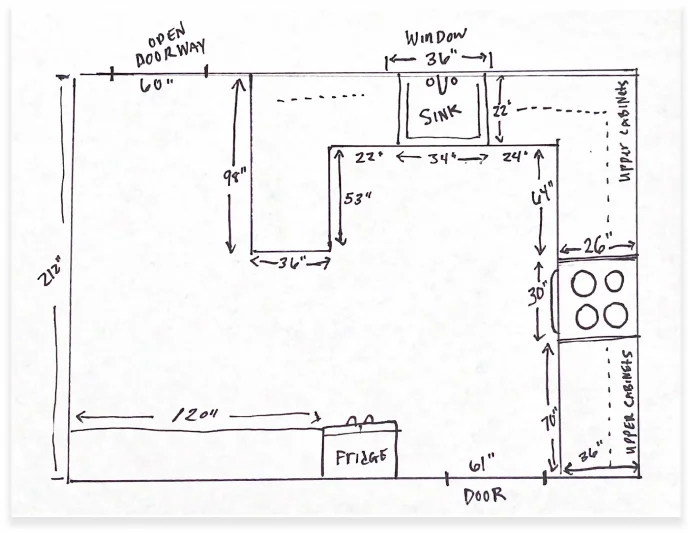
Credit: destinationcabinets.com
Using Software For Precision
Using software for precision in kitchen design can transform your project. It ensures measurements are accurate and detailed. This approach minimizes errors and saves time. Designers can visualize spaces before making changes. Software tools offer a practical way to plan kitchens effectively.
Benefits Of Digital Tools
Digital tools simplify the design process. They offer accuracy beyond manual methods. Mistakes in measurement can be costly. Software reduces the risk of errors. It provides detailed visualizations, helping designers see potential issues early. These tools are easy to learn, enhancing efficiency. They allow quick adjustments to designs, saving valuable time.
Popular Kitchen Design Software
Several software options are popular for kitchen design. SketchUp is user-friendly and widely used. It offers 3D modeling for detailed designs. AutoCAD is another choice, known for precision in measurements. Chief Architect is ideal for residential projects. It provides realistic renderings and detailed plans. 2020 Design is specialized for kitchen and bathroom spaces. It offers extensive catalogs and intuitive tools for designers.
Frequently Asked Questions
How Do I Measure Kitchen Cabinets Accurately?
To measure kitchen cabinets, use a tape measure. Measure the width, height, and depth of each cabinet. Note any obstructions like pipes or electrical outlets. Ensure you record measurements in inches or centimeters for precision. Accurate measurements are vital for fitting new cabinetry or redesigning your kitchen layout.
What Tools Are Needed For Kitchen Measuring?
For kitchen measuring, you'll need a tape measure, a notepad, and a pencil. A spirit level can help ensure surfaces are even. Sometimes, a laser measure can provide precise readings, especially in larger kitchens. Accurate tools ensure you capture every detail of your kitchen space.
Why Is Kitchen Measuring Important?
Kitchen measuring is crucial for optimizing space and functionality. Accurate measurements help in designing the kitchen layout, ensuring cabinets and appliances fit perfectly. It prevents costly mistakes and ensures a smooth installation process. Proper measurements also help in creating a visually appealing and efficient kitchen design.
How Do I Measure For Kitchen Countertops?
Start by measuring the length and width of each countertop section. Include any overhangs in your measurements. Note the position of sinks, appliances, and other fixtures. Accurate measurements are essential for ordering the right size and quantity of materials, ensuring a perfect fit and seamless installation.
Conclusion
Accurate measurements make kitchen design easier and more efficient. Start by gathering all necessary tools. Measure your space carefully, noting all dimensions. Consider doorways, windows, and electrical outlets. Record every measurement precisely. This helps in planning your layout effectively. Double-check your notes for any errors.
Precise data ensures a smoother design process. It reduces costly mistakes later. Use your measurements to guide appliance and cabinet choices. A well-measured kitchen saves time and resources. It helps achieve the design you envision. Enjoy the process and see your dream kitchen take shape.