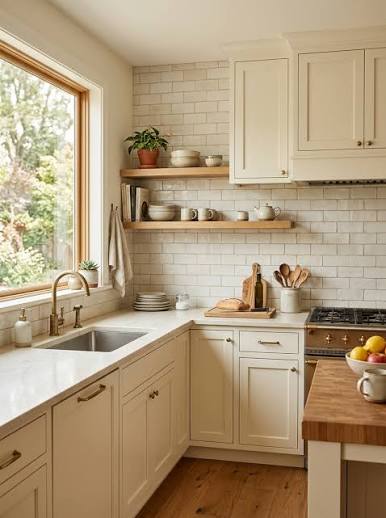
A kitchen can feel more welcoming when its design includes natural textures, warm colors, and thoughtful details inspired by the outdoors. While modern finishes often create a clean appearance, natural elements bring softness and character to the room. Wood, stone, greenery, and natural light can work together to create a comfortable environment that feels connected to the rest of the home.
Wood is one of the most versatile materials for introducing warmth into a kitchen. It can be used for cabinet doors, floating shelves, flooring, dining furniture, or decorative accents. Light oak and maple often create a bright and relaxed atmosphere, while darker wood tones can add depth and a more traditional appearance. Homeowners should select finishes suitable for kitchen conditions and protect wooden surfaces from excessive moisture and heat.
Natural stone can provide another attractive feature. Granite countertops, stone backsplashes, and textured floor tiles introduce patterns that are difficult to reproduce exactly with manufactured materials. Each piece of natural stone may have its own variations in color and texture, giving the kitchen a distinctive appearance. Since different stones have different care requirements, it is important to understand whether sealing or specialized cleaning products are needed.
Indoor plants can make a kitchen feel fresher and more lively. Small herb pots containing basil, mint, rosemary, or parsley can provide convenient ingredients for everyday cooking. A sunny windowsill may be suitable for growing certain herbs, while other plants may need indirect light. Choosing plants that are appropriate for the available conditions helps prevent unnecessary maintenance. Their containers should also be placed away from hot surfaces and areas where they could easily be knocked over.
Natural light can have a significant effect on the atmosphere of a kitchen. Large windows, glass doors, and appropriately positioned skylights can help brighten the room during daylight hours. Light-colored curtains or blinds allow homeowners to manage privacy without completely blocking sunlight. Keeping window areas relatively uncluttered can also make a smaller kitchen feel more spacious.
A natural color palette can connect different materials and create a balanced interior. Warm white, sandy beige, muted green, and earthy brown are useful choices for walls, cabinets, and decorative details. These colors complement wood and stone while maintaining a calm appearance. Instead of using several strong shades, homeowners can select a neutral foundation and introduce a few natural accent colors through accessories or textiles.
Lighting fixtures can reinforce the overall design. Pendant lights made with wood, glass, or natural-looking finishes can add character above a kitchen island or dining counter. Under-cabinet lighting provides practical illumination for food preparation, while ceiling fixtures brighten the entire room. Combining different types of lighting makes the kitchen more adaptable to cooking, cleaning, and relaxed family meals.
Natural textures can also appear in smaller details. Woven baskets can hold fruit or kitchen towels, while wooden chopping boards can be displayed neatly when not in use. Linen curtains and simple cotton runners may introduce softness without making the room feel crowded. These accessories should remain easy to clean because kitchens are exposed to cooking grease, moisture, and occasional spills.
Ventilation is essential when incorporating natural materials and plants into a kitchen. Cooking produces steam and moisture that can affect cabinets, wooden surfaces, and nearby walls if airflow is inadequate. A suitable extractor hood helps remove excess moisture and odors. Regularly checking ventilation equipment and cleaning its filters can support a healthier indoor environment.
Homeowners should also consider sustainability when selecting natural finishes. Responsibly sourced wood, long-lasting countertops, reusable storage containers, and energy-efficient lighting can support more environmentally conscious choices. Durable materials may cost more initially, but their longer service life can reduce the need for frequent replacements.
Bringing natural warmth into a kitchen is not about filling every corner with decorative objects. It is about choosing a thoughtful combination of materials, colors, plants, and lighting that makes the room feel comfortable. With balanced design choices and practical maintenance, a kitchen can become a relaxing space that combines natural beauty with everyday functionality.
Leave a Reply