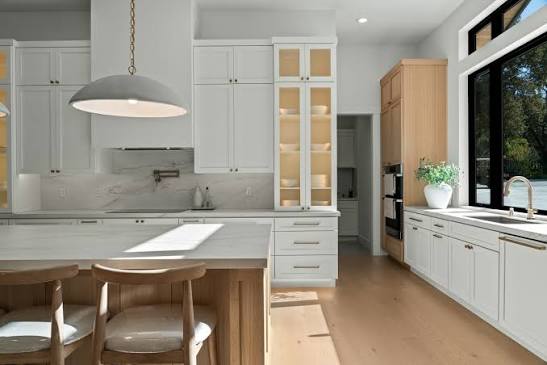
A busy household needs a kitchen that can handle daily cooking, grocery storage, cleaning, and family activities without becoming difficult to manage. When several people use the same space, poor organization can quickly lead to crowded countertops and unnecessary delays. An efficient kitchen design focuses on making essential items accessible, reducing wasted movement, and creating enough room for different activities.
A practical starting point is to organize the kitchen according to everyday tasks. Food preparation, cooking, washing, and storage should each have a convenient location. Keeping chopping boards, knives, and mixing bowls near the main preparation surface saves time. Cooking utensils and frequently used ingredients should be stored close to the stove, while cleaning supplies can remain near the sink in a secure cabinet. This arrangement reduces the need to walk across the room repeatedly.
Meal preparation becomes easier when the kitchen includes a dedicated area for planning and organizing ingredients. A clear countertop provides space for washing vegetables, measuring ingredients, and arranging cookware before cooking begins. Families that prepare meals in advance may benefit from additional containers and refrigerator storage. Keeping these supplies organized can make weekday cooking faster and reduce last-minute stress.
A well-designed refrigerator area can also improve efficiency. The refrigerator should be easy to access without blocking the main walkway. Nearby counter space is useful when unpacking groceries or preparing ingredients. Inside the appliance, separate storage sections help organize dairy products, vegetables, beverages, and prepared meals. Regularly checking stored food can prevent waste and make shopping decisions more straightforward.
Kitchen drawers and cabinets should support quick access to essential equipment. Deep drawers are useful for cookware, while narrow organizers can hold spices, cutlery, and cooking tools. Pull-out pantry shelves make it easier to locate ingredients without searching through crowded cupboards. Storing heavy objects in lower cabinets can also make the kitchen safer and more convenient to use.
Lighting can improve productivity in a busy kitchen. General ceiling fixtures provide overall illumination, but focused lighting is important for detailed tasks. Under-cabinet lights can brighten preparation surfaces, while suitable lighting above the sink makes washing dishes easier. If the kitchen includes a dining counter, a separate fixture can create a comfortable atmosphere for quick meals and conversations.
Durable surfaces are particularly valuable in households where the kitchen is used throughout the day. Countertops should withstand regular cleaning and everyday food preparation. Cabinet finishes should be easy to maintain, and flooring should handle spills and frequent movement. Choosing materials according to their maintenance requirements can help homeowners avoid unnecessary repairs and replacements.
Waste management should be simple and accessible. Separate containers for general rubbish and recyclable materials can encourage better household habits. A pull-out bin system inside a cabinet keeps containers out of sight while making them convenient to reach. Food waste should be removed regularly to prevent unpleasant odors and discourage pests. Keeping cleaning supplies organized in a designated area also makes routine maintenance easier.
Appliance selection should reflect the actual needs of the household. A large family may require a spacious refrigerator and dishwasher, while a smaller household might benefit from compact equipment. Before purchasing appliances, homeowners should compare capacity, energy consumption, noise levels, and maintenance requirements. Proper measurements are essential to ensure that doors and drawers can open without interfering with nearby cabinets.
A kitchen used by several family members should also include enough room for safe movement. Clear walkways, accessible storage, and appropriately positioned appliances can reduce interruptions during cooking. If children regularly enter the kitchen, potentially dangerous items should be stored securely, and hot cooking areas should remain separate from busy pathways.
An efficient kitchen is created through practical planning rather than expensive decorations. A sensible layout, organized storage, reliable appliances, durable materials, and suitable lighting can make everyday tasks easier. By arranging the space around household routines, homeowners can create a kitchen that remains organized and comfortable even during the busiest parts of the day.
Leave a Reply