Have you ever wondered how much your kitchen appliances lose value over time? Whether you're planning to sell your home, upgrade your kitchen, or just curious about the true worth of your gadgets, understanding depreciation is key.
Imagine knowing exactly how much your trusty refrigerator or that sleek oven really costs you in the long run. This knowledge can help you make smarter financial decisions, saving you money and possibly increasing the resale value of your home.
Dive into this article to discover the hidden truths about kitchen appliance depreciation and how it affects your wallet. You might be surprised by what you learn!
Credit: www.fortunebuilders.com
Factors Influencing Depreciation
Understanding how much kitchen appliances depreciate is essential when considering their value over time. Several factors can influence how quickly or slowly these appliances lose their value. Knowing these factors can help you make informed decisions about purchasing, maintaining, or selling your kitchen gear.
Age Of Appliances
The age of your kitchen appliance is one of the most significant factors affecting its depreciation. Newer models tend to hold their value better than older ones. If you've ever tried selling an outdated toaster, you might have noticed it fetched less than a newer model, no matter how well it still worked.
Brand And Quality
Brand and quality play crucial roles in depreciation. High-end brands like Bosch or KitchenAid often maintain their value longer due to their reputation for quality and durability. Next time you’re buying, consider if a well-known brand is worth the investment for its slower depreciation.
Frequency Of Use
How often you use your appliances can also impact their value. Frequent use can lead to wear and tear, reducing the appliance’s lifespan. Think about your trusty blender—if it’s used daily, it will likely depreciate faster than the waffle maker you only bring out on special occasions.
Technological Advancements
Technology evolves rapidly, and kitchen appliances are no exception. New features and improvements can make older models seem obsolete. If your appliance lacks smart connectivity or energy efficiency, its value might drop quickly as newer, more advanced models hit the market.
Have you ever considered how these factors affect your kitchen appliances? Perhaps it’s time to evaluate which items in your kitchen are worth upgrading or maintaining. Understanding depreciation can guide you in making savvy choices that save money in the long run.

Credit: www.stessa.com
Depreciation Rates For Common Appliances
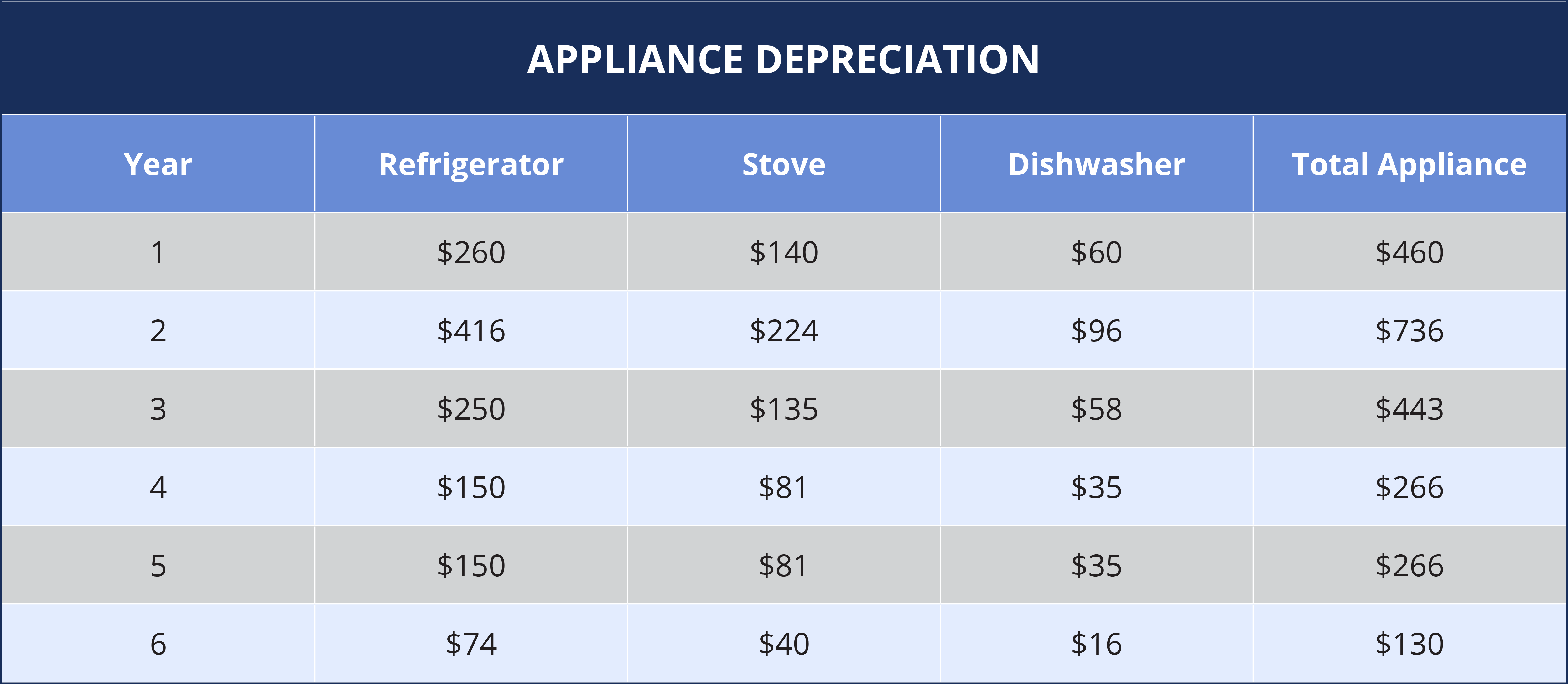
Understanding the depreciation rates for kitchen appliances can save you money and help you plan better for your future purchases. Have you ever wondered why your once shiny refrigerator or dishwasher loses its value over time? It's not just wear and tear; it's the steady march of depreciation. Knowing how much an appliance will depreciate can guide your purchasing decisions and even help you decide when it's time to upgrade. Let's dive into the depreciation rates for some common kitchen appliances.
Refrigerators
Refrigerators tend to depreciate steadily over their lifespan. Typically, a new fridge loses about 10% of its value each year. So, if you bought a refrigerator for $1,000, expect it to be worth around $900 after the first year. By the time it's five years old, its value could be cut in half. Have you ever tried selling an old fridge? It's not always easy to get a good price, which is why understanding depreciation is key.
Ovens And Stoves
Ovens and stoves are kitchen workhorses, and their depreciation rates reflect their constant use. These appliances usually depreciate at a rate of about 8% per year. If you purchase a stove for $800, it might be worth around $736 after the first year. Unlike refrigerators, ovens and stoves often hold their value a bit better due to their durability. But remember, repairs can add up, impacting your overall costs.
Dishwashers
Dishwashers depreciate a bit faster than some other appliances, often losing around 12% of their value each year. A $500 dishwasher might drop to $440 after just one year. This rapid depreciation is due to frequent use and potential mechanical issues. You might find that after a few years, repairs can outweigh the benefits of keeping an older model. Consider this when deciding whether to repair or replace.
Microwaves
Microwaves are smaller investments but still experience depreciation. Typically, they depreciate at a rate of about 15% per year. If you buy a microwave for $200, expect it to be worth about $170 after a year. Due to their lower initial cost, replacement might be more economical than repairs. Have you ever tried fixing a microwave? Sometimes, buying new is just easier.
Depreciation is an inevitable part of owning kitchen appliances. By understanding these rates, you can make informed decisions about when to upgrade, sell, or repair your appliances. How do you decide when it's time for a new appliance? Your approach might change once you consider these depreciation insights.
Methods For Calculating Depreciation
Kitchen appliances lose value as they age. Depreciation methods like straight-line or declining balance help determine their current worth. Understanding these methods aids in evaluating appliance value over time.
Calculating the depreciation of kitchen appliances is essential for understanding their true value over time. If you've ever wondered why your once shiny refrigerator doesn't fetch a high resale price, it's because appliances lose value as they age. Depreciation methods help quantify this loss, guiding you in making informed decisions whether you're selling, buying, or simply accounting for them in your budget. Let's dive into some practical methods for calculating depreciation.
Straight-line Method
The Straight-Line Method is straightforward and easy to grasp. You evenly distribute the cost of your appliance over its useful life. Imagine you bought a dishwasher for $600 and expect it to last 10 years. Each year, it would depreciate by $60. This method assumes the appliance loses its value at a constant rate. It's predictable and simple, making it a favorite among homeowners. But does your appliance really degrade evenly year after year?
Declining Balance Method
The Declining Balance Method is a bit more dynamic. It considers that appliances often lose more value in their early years. This makes sense if you think about how quickly a new microwave loses its novelty. Here, you apply a constant percentage rate to the appliance's remaining book value each year. For instance, if your blender depreciates at 20% annually, its value drops faster initially. This method reflects reality better but can be tricky to calculate manually.
Units Of Production Method
The Units of Production Method is intriguing. It bases depreciation on usage rather than time. This is perfect if your appliance sees irregular use. Perhaps your oven works overtime during holiday seasons but rests during summer. You first estimate the total number of units (like hours or cycles) your appliance will serve. Depreciation then depends on actual usage. If your washing machine is a workhorse, its value decreases faster. This method aligns with your lifestyle, but requires diligent tracking. Calculating depreciation isn't just for accountants. It's a tool for anyone who wants to maximize their investments in home appliances. Which method speaks to you? Do you prefer a predictable path or one that mirrors your appliance's wear and tear? Understanding these methods can empower you to make smarter decisions and ultimately save money.
Impact Of Maintenance On Value
The impact of maintenance on the value of kitchen appliances is significant. Proper upkeep ensures appliances last longer and retain their value. Regular maintenance tasks can make a huge difference. They prevent depreciation and keep appliances functioning well. This section explores the importance of regular cleaning, timely repairs, and replacing parts.
Regular Cleaning
Regular cleaning keeps kitchen appliances in top shape. Dirt and grime can cause wear and tear. This reduces the appliance's lifespan. Clean appliances work better and consume less energy. This not only saves money but also maintains value. Frequent cleaning prevents issues that might arise from neglect. It also helps in spotting potential problems early.
Timely Repairs
Timely repairs extend the life of kitchen appliances. Small issues can turn into big problems if ignored. Fixing problems quickly prevents further damage. This helps in preserving the appliance's value. A well-maintained appliance is less likely to break down. Regular check-ups can identify issues early, saving money on costly repairs later.
Replacement Of Parts
Replacing parts is sometimes necessary for optimal performance. Worn-out parts can affect an appliance's efficiency. New parts ensure the appliance works as intended. This keeps the appliance in good working condition. Replacing parts can also update older models. This improves both functionality and value. Regularly inspect parts to determine if they need replacing.
Resale Value Considerations
Kitchen appliances lose value over time. New models and tech advancements speed up this decline. Buyers often seek newer features, reducing older appliances' resale value.
When you're thinking about selling your kitchen appliances, understanding their resale value is crucial. Appliances, much like cars, lose value over time. But the depreciation rate can vary significantly based on several factors. Knowing what affects resale value can help you make informed decisions, whether you're upgrading or downsizing your kitchen.
Market Demand
The resale value of your kitchen appliances heavily depends on market demand. If you're selling an energy-efficient refrigerator just when everyone is seeking to cut down on energy bills, your timing is perfect. On the other hand, if you're trying to offload an old model during a wave of new technology releases, you might have to lower your expectations. Think about what buyers in your area are currently searching for. Check online marketplaces or local classifieds to see what similar appliances are selling for. This helps you gauge if your appliance type is in demand.
Condition Of Appliances
The condition of your appliances plays a massive role in determining their resale value. A well-maintained dishwasher with no scratches or dents will fetch a higher price than one that looks like it's been through a war zone. Regular maintenance, like cleaning and servicing, can pay off when it's time to sell. Consider the buyer's perspective. Would you pay top dollar for an appliance with visible wear and tear? Make sure your appliances are clean and in good working order before listing them for sale.
Brand Reputation
Brand reputation can significantly influence how much you can sell your kitchen appliances for. High-end brands like Sub-Zero or Wolf usually retain their value better because they are associated with quality and durability. A reputable brand can assure potential buyers that they're getting a reliable product, which can justify a higher price point. Reflect on your own buying habits. Are you more likely to spend extra on a trusted brand? If you own appliances from a reputable brand, highlight this in your listing to attract more buyers and potentially increase your resale price. When considering selling your kitchen appliances, think about these factors. Are you making the most of the current market demand? Is your appliance in the best condition possible? Does the brand stand out in the crowd? Answering these questions can guide you in setting a realistic price that reflects the true value of your appliances.

Credit: wrcqs.com.au
Tips For Minimizing Depreciation
Kitchen appliances lose value over time. This process is called depreciation. Understanding how to slow this down can save money. Let's explore some tips to help keep their value longer.
Proper Installation
Ensure appliances are installed correctly. Faulty installation can lead to damage. Follow the manufacturer's instructions closely. Use professionals if needed. This prevents undue wear and tear.
Consistent Usage
Use appliances as intended. Overloading or misuse can cause breakdowns. Stick to recommended settings. This preserves their condition and extends lifespan.
Energy Efficiency
Choose energy-efficient appliances. They operate smoothly and last longer. Energy-efficient models often have better parts. This can result in less frequent repairs.
Frequently Asked Questions
What Affects Kitchen Appliance Depreciation?
Several factors influence kitchen appliance depreciation, including age, usage, and condition. Newer models depreciate slower due to better features. Frequent use and poor maintenance can accelerate depreciation. Market trends and technological advancements also impact value over time. Regular care can help maintain appliance worth.
How Quickly Do Appliances Lose Value?
Kitchen appliances typically depreciate around 10% annually. Initial years see faster depreciation due to wear and tear. After five years, appliances generally retain about half of their original value. Technological advancements and new models can further decrease their market worth.
Are Older Appliances Worth Less?
Yes, older appliances tend to be worth less due to wear and outdated technology. They often lack modern features found in newer models. This affects their resale value. Buyers prefer newer, efficient appliances, leading to a decrease in demand for older ones.
Can Maintenance Affect Depreciation Rate?
Proper maintenance can slow down the depreciation rate of kitchen appliances. Regular cleaning and timely repairs keep appliances functioning efficiently. This enhances their lifespan and value. Neglecting maintenance can lead to faster depreciation and reduced resale value.
Conclusion
Kitchen appliances lose value over time. Age impacts depreciation the most. Older models often depreciate quicker. Technology updates can reduce appliance value. High-quality brands may hold value better. Regular maintenance helps extend lifespan. Buying wisely saves money long-term. Consider energy efficiency and durability.
Choose models with good reviews. Smart shopping leads to better value retention. Always check warranties before purchase. Appliances are investments. Understanding depreciation aids smart decisions. Keep these tips in mind for future purchases. They help protect your investment. Make informed choices.