Imagine turning your back for just a second, and your little one is already reaching for the oven door or fiddling with the blender. It's a heart-stopping moment every parent dreads.
Your kitchen, a place of warmth and creativity, can quickly become a danger zone for curious young explorers. But what if you could transform it into a safe haven without compromising on style or functionality? In this guide, you'll discover simple, effective strategies to childproof your kitchen appliances.
These tips are designed to give you peace of mind and keep your child safe, turning potential hazards into no-go zones for tiny hands. Whether you're a new parent or just need a refresher, you'll find practical advice that fits seamlessly into your daily routine. Ready to make your kitchen a safer place for your little adventurer? Read on to learn how you can protect what matters most.
Credit: kitchencabinetkings.com
Identifying Kitchen Hazards
Childproofing the kitchen starts with spotting potential dangers. Children are curious explorers, and the kitchen is full of interesting objects. Understanding the risks helps in creating a safer environment. Recognizing common kitchen hazards is the first step.
Common Kitchen Dangers
Sharp objects pose a significant threat in the kitchen. Knives, scissors, and peelers should be stored out of reach. Hot surfaces also present a danger. Stovetops and ovens can cause burns. Keep children away from these areas.
Small objects can be choking hazards. Coins, bottle caps, and small toys should be kept off counters. Cleaning supplies and chemicals are harmful. Store them in locked cabinets. Ensure that electrical outlets are covered. This prevents accidents involving electrical appliances.
High-risk Appliances
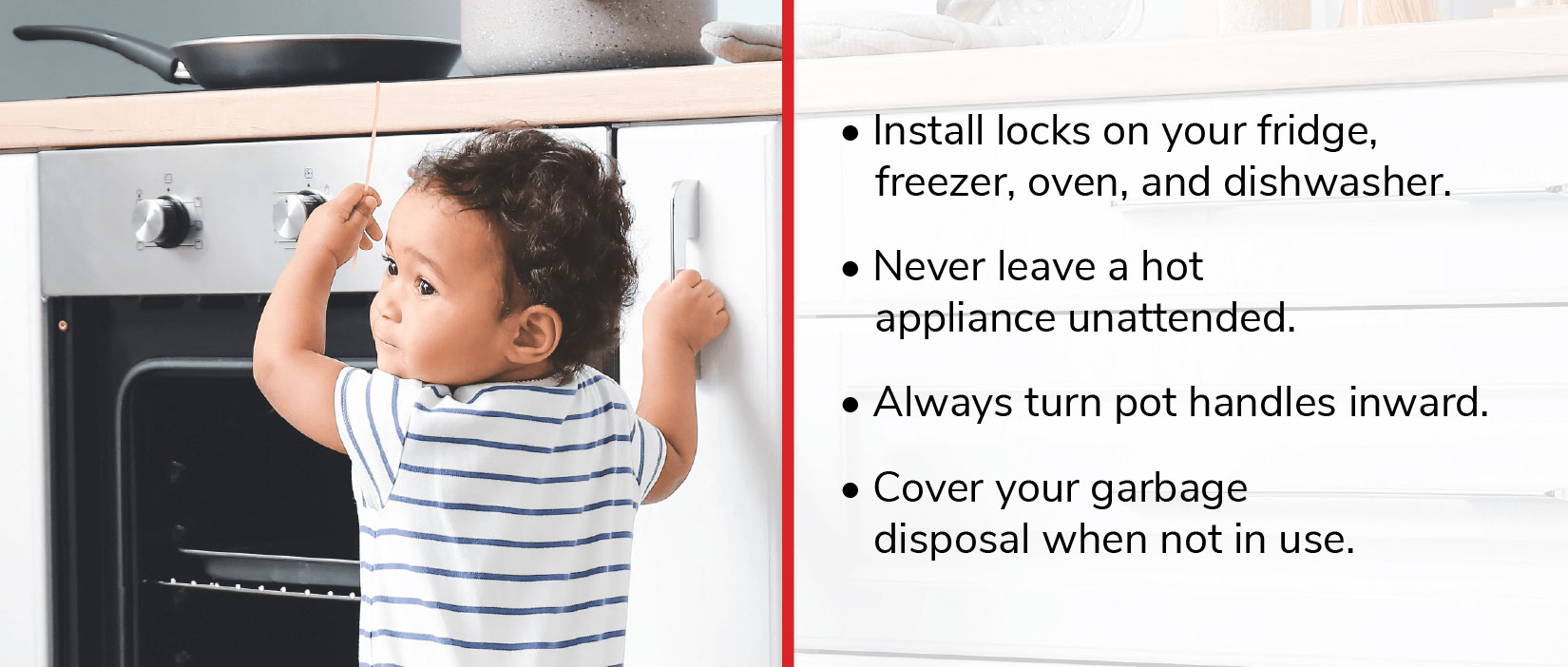
Some appliances pose a higher risk than others. The stove and oven are among the most dangerous. Use stove guards to prevent burns. Install oven locks to keep children safe.
Microwaves are also risky. They are often within a child's reach. Consider placing them on higher shelves. Dishwashers can be attractive to children. Keep them locked when not in use. Blenders and mixers have sharp blades. Store these appliances out of children's reach.
Safety Locks And Latches
Childproofing your kitchen is an essential step in ensuring the safety of your little ones. An often overlooked area is the use of safety locks and latches on kitchen appliances. These simple yet effective tools can prevent accidents and keep curious hands away from potential hazards. As a parent, nothing is more reassuring than knowing you've taken steps to protect your child from harm. Let's delve into practical ways to safeguard your kitchen using cabinet and drawer locks, as well as appliance-specific locks.
Cabinet And Drawer Locks
Cabinet and drawer locks are a lifesaver when it comes to keeping your child's hands out of dangerous spaces. Imagine the peace of mind knowing that sharp knives, cleaning supplies, and fragile items are securely locked away.
These locks come in various styles, such as magnetic locks, adhesive latches, or even simple straps. Each type serves the same purpose—keeping your child safe. Magnetic locks are discreet and easy to install, while adhesive latches offer a straightforward solution without the need for tools.
When I first childproofed my kitchen, I opted for magnetic locks because they were invisible from the outside. It was a breeze to install, and my toddler never realized the cabinets were locked. Have you considered which type of lock might suit your kitchen best?
Appliance-specific Locks
Appliance-specific locks ensure that devices like ovens, refrigerators, and dishwashers are inaccessible to little fingers. These locks are designed to withstand the curiosity of young children, providing an added layer of security.
For instance, oven locks prevent the door from being opened, reducing the risk of burns. Refrigerator locks are perfect for keeping food and small items out of reach. Dishwasher locks ensure that detergents and other hazardous materials are safely contained.
During a family gathering, my nephew managed to open the fridge and helped himself to a carton of eggs. It was a chaotic scene! Installing a fridge lock afterward was a no-brainer. Have you experienced a similar situation that prompted a safety upgrade?
Incorporating these locks into your kitchen setup is a straightforward process. Once installed, you can focus on what truly matters—creating a safe environment for your child to explore and learn.
Childproofing The Stove
Childproofing the stove is essential for kitchen safety. Stoves can be dangerous for curious kids. Ensuring safety around this appliance prevents accidents. Simple modifications can make a big difference.
Knob Covers And Guards
Stove knobs are easily accessible to small hands. Install knob covers to prevent accidental turning. These covers fit over knobs, making them difficult for children to grip. Some designs require adult pressure to operate. Guards can also shield knobs from curious fingers. They provide an additional layer of security.
Oven Safety Tips
Ovens pose a risk of burns and injuries. Use oven locks to keep doors securely shut. These locks prevent children from opening hot ovens. Also, consider installing a heat-resistant oven shield. It helps reduce the risk of burns from touch. Regularly check the oven light and ensure it's working. A visible light lets kids see inside without opening the door. Teach children the importance of staying away when the oven is hot.
Securing The Refrigerator
Ensure your refrigerator is childproof by installing safety locks to prevent access. Secure the appliance with corner guards to avoid sharp edges. Keep small items and cleaning supplies out of children's reach for added safety.
Securing the refrigerator is a crucial step in childproofing your kitchen. Children are naturally curious, and the refrigerator is an enticing treasure trove of goodies and hazards. By making it safe, you not only protect your child but also gain peace of mind knowing your kitchen is a safer place.
Fridge Locks
Investing in a good fridge lock can make a world of difference. Many parents, myself included, have found them to be lifesavers. Look for easy-to-install locks that are sturdy yet simple for adults to open. Consider locks that blend well with your fridge design. Some come in sleek designs, so they don't disrupt your kitchen aesthetic. Remember, it's not just about safety; it's about maintaining a pleasant environment too.
Safe Storage Practices
How you organize your fridge can also enhance safety. Place hazardous items like cleaning supplies or alcohol on higher shelves, out of reach. This way, even if your child manages to open the fridge, they can't access dangerous items. Make use of clear containers for food storage. This not only keeps things organized but also helps you spot expired items easily. An organized fridge is less likely to tempt little hands with its clutter. Think about how you utilize the fridge door. It's often the first place children grab from. Store harmless items like water bottles or condiments there. This small change can prevent accidents and keep your child safe. Securing your refrigerator doesn't have to be a daunting task. With thoughtful adjustments and simple tools, you can transform this everyday appliance into a child-friendly zone. What strategies will you try today to make your fridge safer?
Microwave Safety Measures
Ensure microwaves are out of children's reach by placing them on high counters. Use safety locks to prevent accidental usage, and avoid storing harmful items nearby.
Ensuring the safety of your little one in the kitchen can feel like a big task, especially with appliances like microwaves that are within easy reach. Microwaves are incredibly useful but can pose risks if not properly childproofed. It’s vital to implement safety measures to prevent accidents. You can start by considering some simple yet effective strategies.
Door Locks
One of the simplest ways to childproof your microwave is by using door locks. Have you ever worried about your child pressing buttons or trying to open the microwave door? Door locks can effectively prevent this by keeping the microwave securely closed when not in use. They are easy to install and remove, making them a practical solution for busy parents. Choose a lock that is sturdy and easy for adults to open but challenging for little hands. For instance, adhesive locks can be a great option as they don't require drilling and can be removed without leaving a mark. Do you already have a favorite childproofing lock, or are you still looking for the right one?
Placement Considerations
Where you place your microwave can significantly impact its safety. Have you ever thought about how accessible your microwave is to your child? Placing it on a higher shelf or countertop can help keep it out of reach. This can be especially effective if you have curious toddlers who love to explore everything at their eye level. Alternatively, if your kitchen design allows, consider installing the microwave in a cabinet. This not only keeps it out of sight but also adds an extra layer of security. Remember, the goal is to make your kitchen a safe space where your child can learn and grow without unnecessary risks. Implementing these measures can give you peace of mind and allow you to focus more on creating those memorable moments in the kitchen. Are there other appliances in your kitchen that might need similar attention?
Credit: www.cpsc.gov
Keeping Small Appliances Safe
Preventing accidents in the kitchen starts with securing small appliances. Install safety locks and covers to keep curious hands away from dangerous buttons and cords. Place items out of reach to ensure a safer environment for little ones.
Keeping small kitchen appliances safe is essential for a childproof home. Little hands are naturally curious, and the kitchen is full of intriguing gadgets and tools that can pose risks. By taking proactive steps, you can keep your kitchen a safe space where your children can explore under your watchful eye without unnecessary worries.
Cord Management
Managing appliance cords is a critical step in childproofing your kitchen. Long cords can easily be pulled by a child, causing appliances to topple, creating a hazard. Use cord shorteners or twist ties to keep them neat and out of reach. Consider installing a power strip with a switch that can be mounted on the wall. This not only organizes cords but also allows you to turn off multiple appliances at once, adding an extra layer of safety. Think about the layout of your kitchen to ensure cords aren't draping over the edges of counters.
Storage Solutions
Storing small appliances safely is another important aspect of childproofing. Cabinets with child-proof locks can be your best friend. Store heavier appliances on lower shelves to prevent them from falling. If you're like me, you might have a favorite spot for your coffee maker or blender. While it's convenient, make sure these spots are not easily accessible to your children. Consider using appliance garages or pull-out shelves to keep these items tucked away when not in use. Does your storage solution make it easy for you to access items without compromising safety? Reevaluate your setup with a fresh perspective, ensuring it’s both functional for you and safe for your children. By organizing your kitchen thoughtfully, you can maintain a space that's both efficient and secure.
Chemical And Cleaning Product Safety
Children are naturally curious explorers. They often venture into places they shouldn't. The kitchen is one of those places. It holds many dangers, especially from chemicals and cleaning products. Parents must ensure these items are safely stored. This keeps little ones safe from harm.
Safe Storage Techniques
Keep all chemicals out of children's reach. Store them in high cabinets. Use containers with child-resistant caps. Always label cleaning products clearly. Never transfer them to food containers. This prevents accidental ingestion. Regularly check for leaks or damage. Dispose of expired products promptly.
Childproof Cabinets
Install childproof locks on lower cabinets. This stops little hands from accessing dangerous items. Use magnetic locks for a hidden solution. They are effective and easy to install. Cabinet latches provide another layer of safety. Always double-check locks after use. Consistency is key in preventing accidents.

Credit: www.plessers.com
Educating Children On Kitchen Safety
Ensuring kitchen appliances are safe for children involves unplugging unused devices and securing cords out of reach. Install safety locks on oven doors and use knob covers to prevent accidental operation. Teach kids about the dangers of hot surfaces and sharp objects to promote safe kitchen habits.
Educating children on kitchen safety is crucial for their well-being and your peace of mind. A kitchen is a place of creativity but also contains potential hazards. By teaching children how to navigate this space safely, you foster independence and responsibility. You might even find your little ones surprising you with their understanding and caution, turning a potentially chaotic environment into a harmonious learning ground.
Age-appropriate Guidelines
Tailor your safety instructions to fit your child's age and maturity. For toddlers, emphasize the importance of staying away from hot surfaces and sharp objects. Use simple phrases like "hot" and "sharp" to make the concepts stick. For school-aged children, you can introduce more detailed explanations. Explain why certain appliances should only be handled by adults. Encourage them to ask questions about what they see in the kitchen. Teenagers can handle more responsibility. Teach them how to use appliances safely, like turning off the stove and unplugging devices. Discuss the importance of reading appliance manuals and safety notices.
Interactive Safety Lessons
Engage your children with hands-on activities that teach safety. Create a game where they identify safe and unsafe kitchen practices. This not only makes learning fun but also reinforces their understanding. Role-playing can also be effective. Act out different kitchen scenarios where they must decide the safest action. This builds their confidence in real-life situations. Involve them in cooking under supervision. Allowing them to mix ingredients or set the table can teach them about kitchen safety indirectly. This practical involvement helps solidify their learning. Have you ever noticed how children mimic adult behavior? By demonstrating safe practices yourself, you become a powerful role model. Encouraging them to participate in safety drills can also make these lessons unforgettable. By focusing on education, you empower your children to make smart decisions, paving the way for a safer kitchen experience for everyone. What safety habits will you instill in your children today?
Emergency Preparedness
Ensuring kitchen safety is crucial for every home with children. Emergency preparedness is a key aspect of childproofing kitchen appliances. It means being ready for unexpected situations. Having a plan helps you act quickly. It minimizes risk and ensures safety. Emergency preparedness is more than just having tools. It's about knowledge and readiness.
First Aid Basics
Understanding first aid can save lives. Always keep a first aid kit in the kitchen. Make sure it contains bandages and antiseptic wipes. Include burn ointment and gauze pads. Learn how to use each item properly. Knowing CPR is essential. Consider attending a first aid class. Refresh your knowledge regularly. Practice with family members. This ensures everyone knows what to do.
Emergency Contact Information
Keep emergency numbers visible. Post them on the fridge or near phones. Include numbers for local fire and police departments. Add poison control and medical services. Ensure each family member knows these numbers. Teach children how to dial for help. Practice emergency calls without panic. Ensure your phone is always charged. Regularly update emergency contact lists. This ensures quick access during crises.
Frequently Asked Questions
How Can I Secure Kitchen Appliances?
Securing kitchen appliances involves using safety locks and covers. These tools prevent children from accessing dangerous parts. Additionally, store sharp objects and hazardous materials out of reach. Regularly inspect appliances for loose parts or damage. Educating children about kitchen safety is essential.
What Are Child-safe Appliance Covers?
Child-safe appliance covers are protective shields designed for appliances. They prevent accidental burns or injuries. These covers are usually heat-resistant and easy to install. They help keep children safe from hot surfaces. Always ensure the cover fits properly for maximum safety.
Are Stove Knob Covers Effective?
Yes, stove knob covers are effective in preventing accidental burns. They keep stove knobs out of reach of curious children. These covers are easy to install and remove. Make sure they fit securely to avoid tampering. Regularly check their condition for any damage.
How Do I Prevent Fridge Accidents?
To prevent fridge accidents, install childproof locks on the doors. Store heavy items on lower shelves to avoid falls. Keep hazardous materials out of reach. Educate children about the dangers of playing around the fridge. Regularly check locks for proper functioning.
Conclusion
Keeping kitchen appliances safe for children is important. Simple steps make a big difference. Use safety locks on doors. Secure knobs and handles. Store sharp tools out of reach. Regularly check for hazards. Teaching kids about kitchen safety is crucial.
They learn best through example. Show them safe practices every day. Childproofing is not just a task. It's a continuous effort. Protect your children and enjoy peace of mind. A safe kitchen means a happy home. Remember, prevention is better than cure.
Stay vigilant and keep your kitchen kid-friendly.