
Is your kitchen a cluttered mess, making meal preparation feel like a daunting task? You're not alone.
Many people struggle with keeping their kitchens organized, which can lead to stress and wasted time. Imagine walking into your kitchen and finding everything in its place, making cooking a breeze and cleaning up a snap. Sounds like a dream, right?
Well, it’s time to turn that dream into reality. This guide will show you how to transform your chaotic kitchen into a well-organized space that works for you. You’ll discover simple, effective strategies for organizing your kitchen both before and after a big overhaul. Get ready to reclaim your kitchen and enjoy the peace of mind that comes with a tidy, efficient space. Keep reading to find out how you can start this transformation today!

Credit: www.youtube.com
Planning The Kitchen Layout
Organizing a kitchen involves careful planning of the layout. Start by sorting and grouping similar items. Consider storage solutions like shelves and drawers. After organizing, ensure frequently used items are within reach. A tidy kitchen improves efficiency and makes cooking more enjoyable.
Planning the kitchen layout is not just about arranging pots and pans. It's about creating a space that works for you and your lifestyle. A well-planned kitchen can save you time, reduce stress, and even make cooking more enjoyable. Before diving into the actual organizing process, it's essential to have a solid plan in place.
Assessing Your Needs
Begin by thinking about how you use your kitchen. Do you cook elaborate meals or prefer quick fixes? Maybe you love hosting dinner parties, or perhaps you're all about meal prepping. Take a moment to jot down what you need most from your kitchen. Consider the items you use frequently. Is it a coffee maker, a blender, or maybe a spice rack? These should be easily accessible. If you have kids, you might need a drawer dedicated to their snack supplies. Look around and see what's truly essential for your daily routine.
Space Optimization
Space optimization is crucial in ensuring your kitchen is functional. Start by looking at your current layout. Is there wasted space or areas that feel cramped? Think about how you can maximize those spaces. Consider vertical storage solutions like wall-mounted shelves. These can free up counter space and keep items within reach. Sliding racks and pull-out drawers can make accessing pots and pans easier. Use the inside of cabinet doors for storing smaller items like measuring spoons or dish towels. Sometimes, rearranging what you already have can make a big difference. Try moving bulky items that you rarely use to higher shelves. Keep everyday essentials at eye level for easy access. As you plan your layout, ask yourself: What changes could make cooking more efficient and enjoyable? The answer might be simpler than you think.
Decluttering Essentials
Decluttering your kitchen can transform it from chaos to calm. A well-organized kitchen saves time and space. It makes cooking more enjoyable and efficient. Focus on decluttering essentials to create a functional space. Begin with identifying unnecessary items. Then, choose effective disposal methods for a neat kitchen.
Identifying Unnecessary Items
Open each cabinet and drawer. Remove items not used in six months. Ask yourself if you truly need them. Look for duplicates. Keep only what you use often. Avoid storing broken appliances. Donate or recycle things you don't need. This step reduces clutter and frees up space.
Effective Disposal Methods
Choose the best way to dispose of unwanted items. Donate usable items to local charities. Recycle old kitchen gadgets responsibly. Host a garage sale for items in good condition. Use online platforms to sell or give away surplus. Avoid sending items straight to landfill. This ensures a sustainable decluttering process.
Storage Solutions
Organizing a kitchen can be a challenging task. Effective storage solutions make this process easier. Clear clutter and enhance functionality with smart choices. Focus on maximizing space and accessibility. These strategies can transform a chaotic kitchen into a serene space.
Choosing The Right Containers
Select containers that fit your kitchen’s style and needs. Transparent containers let you see contents at a glance. Label containers for quick identification. Use airtight containers to keep food fresh longer. Stackable containers save space and maintain order. Choose durable materials for long-lasting use.
Utilizing Vertical Space
Vertical space often goes unused. Add shelves to maximize this area. Store less-used items on higher shelves. Use hooks to hang utensils and pans. Magnetic strips can hold knives and other metal tools. Install pegboards for flexible organization. A well-organized kitchen uses every inch effectively.
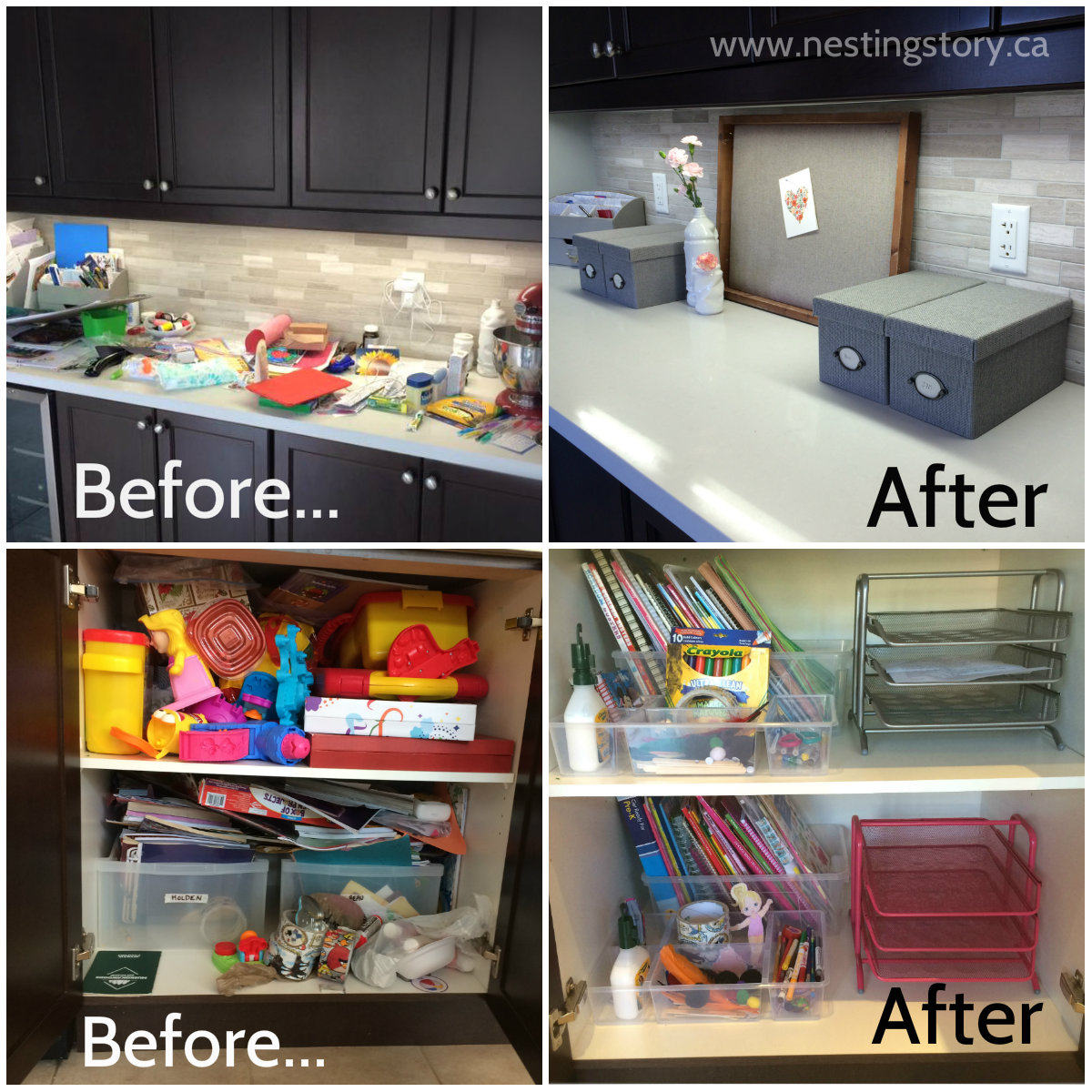
Credit: nestingstory.ca
Organizing By Function
Transform your kitchen by organizing it according to function. Group items based on their use, such as cooking, baking, or storing. Arrange utensils and appliances where they're most needed. This method saves time and enhances efficiency. Enjoy a tidy kitchen before and after every meal preparation.
Organizing a kitchen by function can transform it from a chaotic space into a well-oiled machine. Imagine effortlessly reaching for a pot while cooking or finding the perfect spice without rummaging through a cluttered cabinet. This approach not only enhances efficiency but also makes cooking a more enjoyable experience.
Zoning For Efficiency
Creating zones in your kitchen is all about maximizing efficiency. Consider dividing your kitchen into specific areas: a cooking zone, prep zone, and cleanup zone. This ensures each section has what you need, exactly where you need it, when you need it. For example, keep cooking utensils, pots, and pans near the stove. Place cutting boards, knives, and mixing bowls in the prep zone. Imagine washing dishes with ease because your soap, sponges, and towels are within arm's reach.
Grouping Similar Items
Think about how often you search for that elusive lid or dig through a drawer for a spatula. Grouping similar items can save you time and sanity. Store all baking supplies together, like measuring cups, mixers, and baking sheets, in a dedicated section. Consider using clear containers to store pantry items like flour, sugar, and pasta. This not only looks neat but also helps you quickly see when you need to restock. Ask yourself, how much more enjoyable would cooking be if you didn’t have to hunt for what you need? Organizing your kitchen by function can be a game-changer. It’s not just about tidying up; it's about creating a space that supports your daily routine. By zoning for efficiency and grouping similar items, you pave the way for a smoother, more enjoyable cooking experience.
Maximizing Accessibility
Maximizing accessibility in your kitchen can transform your cooking experience. It ensures everything you need is within easy reach. This organization not only saves time but also reduces stress. A well-organized kitchen enhances efficiency and enjoyment. Below, we discuss strategies to maximize accessibility.
Easy Reach Strategies
Storing frequently used items at eye level boosts kitchen efficiency. Keep cooking utensils, pots, and pans within arm's reach. Place plates and bowls on shelves you can easily access. Arrange your spices and condiments near the stove for quick use. For deeper cabinets, use pull-out shelves or lazy Susans. They make items in the back more accessible. Consider hanging pots and pans to free up cabinet space. A magnetic strip can hold knives and free up drawer space.
Labeling Systems
Labels help in quickly finding what you need. Use clear, simple labels for jars, containers, and shelves. Label shelves inside cabinets to remind you where things belong. This helps all family members to maintain the system. Chalkboard labels are a flexible option. They can be changed easily when contents change. Transparent containers work well for visual organization. You see the contents without opening them. This system reduces the time spent searching for items.

Credit: lastingorder.net
Maintaining Order
Organize a kitchen effectively by sorting items into categories and using clear containers for visibility. After cooking, return everything to its designated spot. This practice keeps the kitchen tidy and efficient for future use.
Maintaining order in your kitchen can feel like a constant battle. But once you've organized your kitchen, keeping it tidy becomes easier with a bit of consistency. Let's dive into some practical tips that will help you maintain that much-desired order.
Routine Cleaning Tips
Establish a daily cleaning routine to keep surfaces clear and hygienic. Wipe down countertops after each meal prep and ensure dishes are washed or loaded into the dishwasher immediately. A clean kitchen not only looks good but also makes cooking more enjoyable. Create a weekly schedule for deeper cleaning tasks. Dedicate specific days for tasks like cleaning the fridge, wiping down cabinet fronts, or mopping the floor. Breaking these tasks into smaller, manageable chunks makes them less daunting. Avoid letting clutter accumulate by regularly purging expired food items and disposing of unnecessary packaging. Keep a small trash can or recycling bin nearby to make this process even more convenient.
Regular Inventory Checks
Conduct regular inventory checks to keep your pantry and fridge organized. This helps you avoid overbuying and reduces food waste. Knowing exactly what you have at home saves you time during meal planning. Make a habit of checking your inventory before grocery shopping. This ensures that you're only buying what you need. Consider creating a shopping list based on the meals you plan to prepare, and stick to it. Keep your pantry organized by grouping similar items together. Use clear containers for dry goods and label them clearly. This not only helps with visibility but also makes it easier to spot when supplies are running low. Do you feel overwhelmed with kitchen tasks? Implementing these small changes can lead to big improvements in keeping your kitchen orderly. Remember, consistency is key, and a well-organized kitchen can enhance your overall cooking experience.
Post-organization Transformation
Transforming a kitchen organization starts with decluttering countertops and cabinets. Arrange essentials like utensils and spices for easy access. After organizing, maintain cleanliness by regularly checking for expired items and tidying up daily.
Transforming your kitchen from chaos to calm can be a game-changer in your daily life. Post-organization, the difference is palpable, from the ease of finding utensils to the joy of cooking in a clutter-free space. This transformation is not just about aesthetics; it's about creating a functional and welcoming environment that works for you.
Evaluating Changes
Step back and take a good look at your newly organized kitchen. Notice how much easier it is to navigate and find what you need. Is the frequently used equipment within arm's reach? Ask yourself if the layout supports your cooking habits. Have you reduced the time spent searching for ingredients? If not, consider minor adjustments. Take note of the newfound space. Can you now accommodate more guests or perhaps add a small herb garden? Evaluate these changes to ensure they truly enhance your kitchen experience.
Adapting For Long-term Success
Maintaining this organization is key. Create a simple routine to keep everything in its place. Regularly declutter and assess what you use versus what you just store. Consider flexible storage solutions. Use adjustable shelves or modular bins that can adapt to your changing needs. This flexibility ensures your kitchen remains efficient. Reflect on how the new organization has impacted your cooking. Are you inspired to try new recipes? Keep adapting your kitchen to support your culinary adventures and enjoy the long-term benefits of a well-organized space.
Frequently Asked Questions
How Do I Start Organizing My Kitchen?
Begin by decluttering your kitchen. Remove items you rarely use. Sort your essentials into categories like cookware, utensils, and pantry staples. Assign specific spaces for each category to keep things orderly. This initial step creates a clear foundation for further organization.
What Are Essential Kitchen Organization Tips?
Use clear containers for pantry items. Install drawer dividers for cutlery. Add hooks for hanging utensils or mugs. Label your storage containers for easy identification. Arrange items by frequency of use. These tips maximize space and enhance accessibility.
How Can I Maintain An Organized Kitchen?
Regularly declutter your kitchen every few months. Always return items to their designated spots. Clean as you go while cooking. Implement a routine to ensure everything stays in order. Consistency is key to maintaining an organized kitchen.
What Tools Help In Kitchen Organization?
Invest in stackable containers for dry goods. Use shelf risers to maximize vertical space. Drawer organizers keep small items tidy. Consider lazy Susans for easy access to spices. These tools optimize your kitchen's functionality and storage.
Conclusion
Organizing your kitchen brings peace and order. It saves time and stress. Begin with removing unused items. Clean and arrange your space. Store items where you need them most. Use labels for easy access. Keep countertops clear. Create zones for cooking and prep work.
Regularly check for expired goods. Maintain your new system. A tidy kitchen is a happy kitchen. These steps make cooking enjoyable. Feel accomplished in a well-organized space. Embrace these changes for a better daily routine. Enjoy your neat and efficient kitchen every day.