Is your kitchen under-sink area a chaotic mess of cleaners, sponges, and random odds and ends? You're not alone.
Many people struggle with keeping this small but crucial space tidy. It's easy to shove things under there and forget about them. But imagine opening that cabinet door to find a neatly organized space where everything has its place. The good news?
Transforming your under-sink area doesn't have to be a daunting task. In this guide, you'll discover simple, effective strategies to turn clutter into calm. Get ready to unlock the secrets of a perfectly organized kitchen under sink that will make your daily routine smoother and more efficient. Don't let that space go to waste—read on to find out how you can maximize its potential and bring harmony to your kitchen!
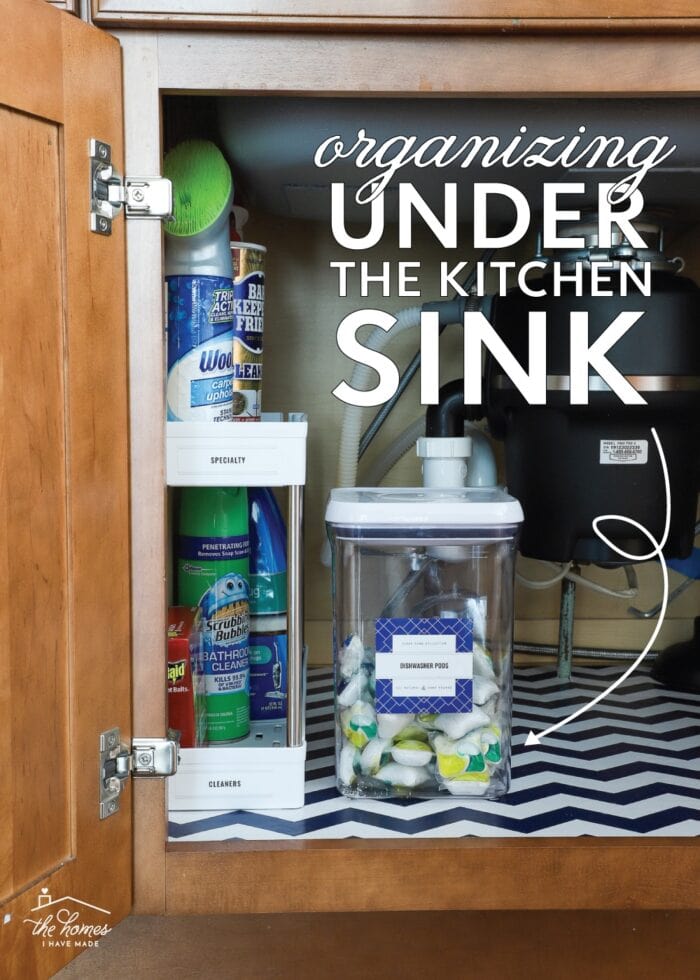
Credit: thehomesihavemade.com
Declutter First
Start with removing items you no longer need. Use baskets or bins to group similar things together. Place frequently used items at the front for easy access.
Organizing the kitchen under the sink can seem like a daunting task, but starting with decluttering can make a world of difference. Clutter tends to accumulate in this often-overlooked space, leading to chaos and frustration. By dedicating some time to clear out unnecessary items, you pave the way for a cleaner, more organized kitchen that feels inviting and functional.
1. Identify The Essentials
Begin by removing everything from under the sink. Lay out all items on a nearby counter or table. This visual assessment helps you identify what you truly need to keep. Ask yourself: Do you really need three nearly empty bottles of dish soap? Keep only what’s essential and in good condition.
2. Sort And Categorize
Once you’ve identified the essentials, start sorting items into categories. Group cleaning supplies, spare sponges, and trash bags separately. This not only helps in organizing but also makes it easier to find items when you need them. Consider using small bins or baskets to keep each category together.
3. Discard Expired Or Broken Items
Check expiration dates on cleaning products and toss anything that’s past its prime. Broken items or those that have seen better days should also go. Holding onto them doesn’t add value to your space. You’ll be surprised at how much room you gain by simply discarding what’s no longer useful.
4. Create A Maintenance Routine
Decluttering is not a one-time event. Set a reminder to revisit this space every few months. Regular maintenance ensures that clutter doesn’t creep back in. Wouldn’t it be nice to always find what you need without a frantic search? Remember, a clutter-free under-sink area doesn’t just look good; it also simplifies your daily routine. By taking the time to declutter, you set the foundation for an organized and efficient kitchen. Enjoy the extra space and newfound peace of mind!
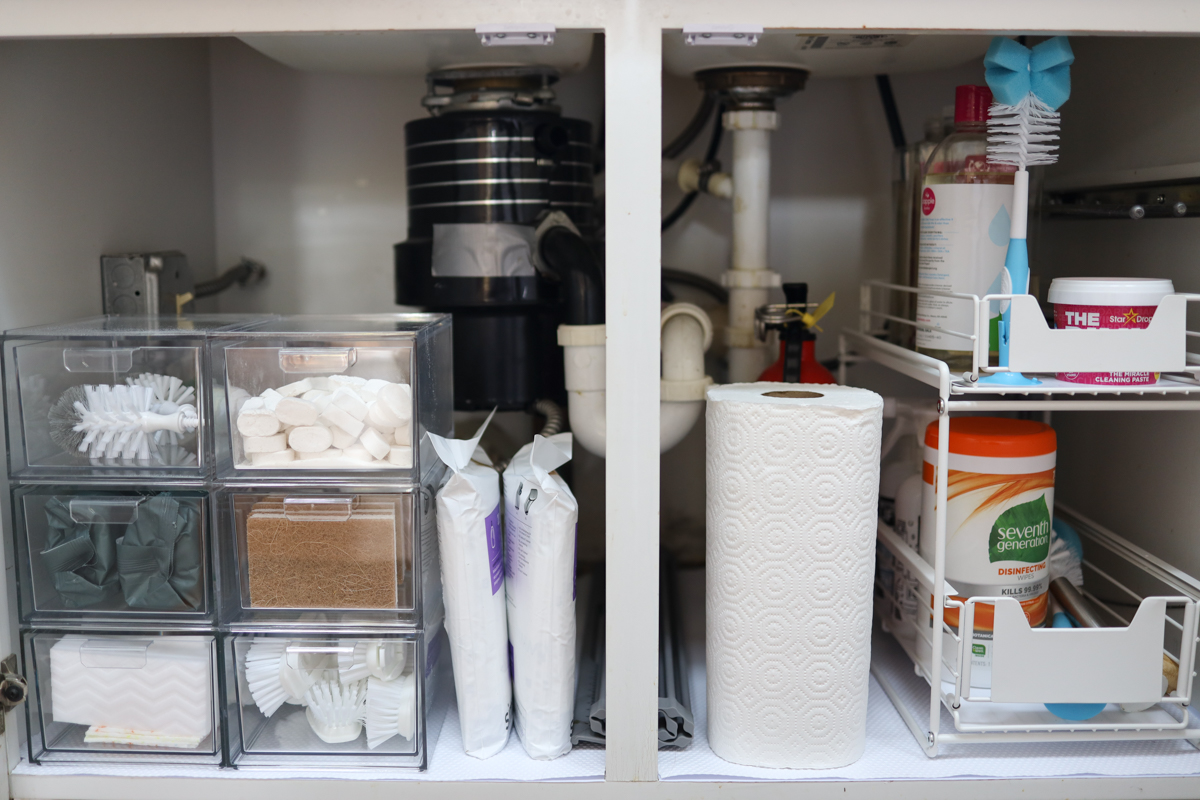
Credit: www.danielle-moss.com
Use Adjustable Shelves
Organizing the kitchen under the sink can seem daunting. Space is limited, and items pile up quickly. Adjustable shelves offer a smart solution. They help maximize vertical space and make access easy. You can customize these shelves to fit your needs. This flexibility makes them ideal for any kitchen.
Benefits Of Adjustable Shelves
Adjustable shelves increase storage options. You can move them to accommodate tall or short items. This makes organizing simple and efficient. Shelves create separate areas for different items. Cleaning supplies can be separate from food storage. This separation helps keep things tidy.
Choosing The Right Adjustable Shelves
Look for shelves that fit your space. Measure the area under your sink. Choose shelves that fit snugly without blocking pipes. Consider the material. Metal shelves are sturdy and last long. Plastic shelves are lightweight and easy to clean.
Installation Tips For Adjustable Shelves
Installing shelves is straightforward. Follow the instructions carefully. Use a level to ensure they are straight. This prevents items from sliding off. Check the weight limit. Avoid overloading shelves to prevent damage. Adjust the height as needed. This ensures items fit comfortably.
Maintaining Your Adjustable Shelves
Keep shelves clean and organized. Wipe them regularly to remove dust. Rearrange items as needed. This keeps your storage efficient. Check for wear and tear. Replace shelves if they show signs of damage.
Incorporate Bins And Baskets
Organizing the space under your kitchen sink can transform the entire room's functionality. One effective way to achieve this is by adding bins and baskets. These simple tools can help you categorize and store items efficiently, making it easier to find what you need when you need it. But how do you make the most out of bins and baskets in your kitchen?
Use Stackable Bins
Stackable bins are a game-changer for maximizing vertical space. They allow you to store items in layers, making use of the often-neglected height under the sink. Imagine having cleaning supplies neatly stacked and easy to reach, without having to rummage through a cluttered pile.
Stackable bins also keep similar items together. Separate bins for sponges, brushes, and cleaning cloths can make a world of difference. You'll know exactly where to find each item, saving time and frustration.
Select Transparent Containers
Transparent bins and baskets offer a quick visual of their contents. You can see at a glance what's inside, reducing the need to open multiple containers to find a single item.
Clear storage options also help you keep track of inventory. It's easier to notice when supplies are running low, ensuring you never run out of dish soap or dishwasher tablets unexpectedly.
Labels are your best friend when organizing under the sink. Even if your containers are transparent, labels make it clear what belongs where. Consider labeling bins with both the item name and its use, like "Cleaning Supplies - Floors".
Labels also come in handy when organizing items that look similar. If you've ever grabbed the wrong spray bottle in a hurry, you know the importance of clear labeling!
Opt For Adjustable Baskets
Adjustable baskets are versatile and can fit around the existing plumbing. They allow you to customize your storage setup, accommodating the unique dimensions of your space.
These baskets can be shifted and adjusted as your needs change. As seasons change, you might find yourself swapping out cleaning products or adding new items, and adjustable baskets make this transition seamless.
Consider Your Routine
Think about your daily kitchen routine as you organize. What items do you use most frequently? Place these in easy-to-reach bins or baskets, saving less-used items for the back.
Reflecting on your habits can lead to surprising insights. You might realize that certain items are better stored elsewhere, freeing up valuable under-sink space.
How do you plan to organize your kitchen sink area? Dive into these strategies and make your kitchen more efficient and enjoyable to use. Embrace the simplicity of bins and baskets, and watch your kitchen transform into a space of order and ease.
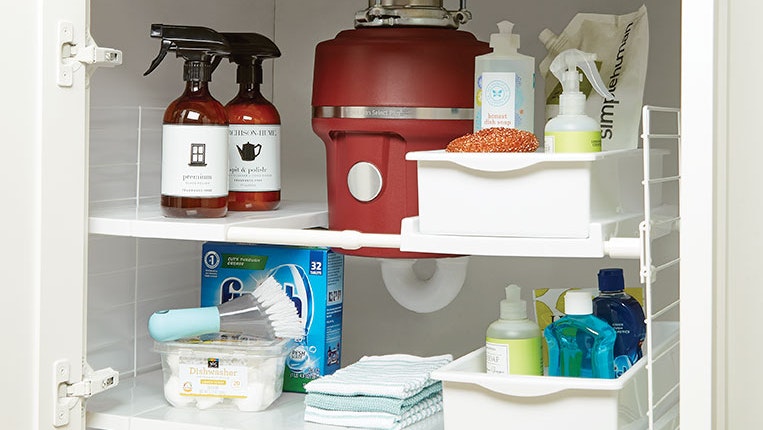
Credit: www.containerstore.com
Label Everything
Organize your kitchen's under-sink area by labeling everything clearly. Use containers for cleaning supplies, ensuring easy access. This method keeps items visible and reduces clutter, making maintenance effortless.
Labeling everything under your kitchen sink might seem like an unnecessary step, but it's a game-changer for organization. It takes away the guesswork, making it easy to find what you need. Plus, it keeps everything in its place, minimizing clutter and chaos.
Why Labeling Matters
Labels create a visual system. They guide you to put items back where they belong. This small act saves time in the long run. Have you ever spent minutes searching for cleaning supplies, only to find them buried at the back? Labels prevent this by making items visible and accessible.
Choosing The Right Labels
Go for durable labels that can withstand moisture. Vinyl or laminated labels work well in humid environments. Think about size and readability. Ensure the text is large enough to read at a glance. You don’t want to squint every time you reach for dish soap.
Labeling Categories
Start by categorizing items. Group similar items together like cleaning supplies, garbage bags, and dishwashing essentials. Label each category clearly. It’s helpful to have a designated spot for everything, reducing the chance of clutter.
Placement Of Labels
Place labels at the front of bins or shelves. This way, you can see them without having to move things around. Consider labeling the top as well if you have a crowded space. This ensures you can identify items even when viewed from above.
Involve The Family
Get your family involved in labeling. This ensures everyone is on the same page and helps maintain order. When everyone knows where things belong, it reduces the likelihood of misplaced items. It’s a team effort to keep the space organized.
Maintenance And Updates
Regularly check your labels. Over time, you might need to update them as your needs change. Are you frequently moving items around? Adjust labels to reflect new storage arrangements, keeping your system efficient. Labeling might seem like a small detail, but its impact is significant. It encourages discipline and ensures everyone knows where things belong. Are you ready to transform your under-sink chaos into an organized haven?
Install Tension Rods
Transforming the chaotic space under your kitchen sink into an organized haven might seem daunting, but installing tension rods can make a world of difference. These simple, versatile tools allow you to maximize the vertical space, creating order out of chaos. Imagine opening those cabinet doors to find everything neatly arranged and accessible. Sounds like a dream, right? Let’s make it a reality.
Why Tension Rods?
Tension rods are inexpensive and easy to install. They require no drilling or hardware, making them perfect for renters or anyone who wants a hassle-free setup. Whether you have cleaning supplies, pots and pans, or even small appliances crammed under the sink, tension rods can help organize them effectively.
How To Install Tension Rods
Start by measuring the width of the space under your sink. Choose rods that can adjust to fit snugly between the walls. Extend the rod until it fits tightly, creating a sturdy base for hanging items. The key is to ensure the rods are level, preventing items from sliding off.
Creative Uses For Tension Rods
Think beyond just hanging spray bottles. Use tension rods to create a mini drying rack for dishcloths or hand towels. You can also hang baskets to store sponges and brushes. It's all about utilizing the vertical space that often goes overlooked.
Maximize Space With Additional Accessories
Pair tension rods with hooks or clips to hold smaller items. Consider adding a second rod for extra storage, creating layers. This approach helps prevent clutter from building up and keeps everything visible and easy to reach.
Personal Experience: A Game Changer
Before installing tension rods, my under-sink area was a jumble of bottles, brushes, and cloths. It was frustrating to find anything. After adding tension rods, not only did everything have a place, but it also freed up floor space for larger items. Could this simple tool be your organization hero?
By utilizing tension rods, you're not just organizing—you're making your kitchen more functional. Imagine the ease of finding what you need without sifting through clutter. It's time to embrace the change and reclaim your space.
Utilize Door Space
The area under the kitchen sink often becomes cluttered. Utilizing door space can help. This space usually goes unused. By organizing, you can store more items efficiently.
Install Hooks For Cleaning Tools
Hooks are perfect for hanging cleaning tools. Use them for brushes and towels. This keeps items off the floor. It also makes access easy. Hooks are inexpensive and easy to install.
Use Over-the-door Baskets
Over-the-door baskets offer extra storage. They fit on cabinet doors. Store small bottles or sponges in them. These baskets keep items organized and within reach.
Attach A Door Organizer
Door organizers come in various sizes. They hold cleaning supplies or trash bags. Use adhesive strips for easy attachment. This keeps the door space neat and useful.
Label Containers For Quick Access
Label containers to know what’s inside. This saves time searching for supplies. Use clear labels for easy reading. This simple step boosts efficiency in your kitchen.
Choose Stackable Containers
Stackable containers offer an efficient way to organize the space under your kitchen sink. They help maximize vertical storage, allowing easy access to cleaning supplies and tools. By using stackable containers, you can maintain order and reduce clutter, making it simple to find what you need quickly.
Organizing the space under your kitchen sink can be a game-changer for maintaining a clutter-free kitchen. One of the most effective strategies is to choose stackable containers. These containers maximize vertical space, making it easier to store and access cleaning supplies, sponges, and other essentials. You might be surprised at how much space you can save with this simple solution.
Choose Containers With Clear Labels
Using stackable containers with clear labels can transform your under-sink area. Clear labels ensure you know exactly where everything is, saving you time when you need to grab a specific item. It's like having your own mini-organized store right under your sink.
Opt For Durable And Moisture-resistant Materials
The area under your sink is prone to moisture, so selecting containers made from durable, moisture-resistant materials is crucial. This protects your items from water damage and prolongs the life of the containers. Have you ever noticed how quickly things can get damp and musty under there? Durable containers can make a big difference.
Utilize Uniform Sizes
Choosing stackable containers of uniform sizes creates a neat and orderly look. This uniformity not only looks pleasing but also maximizes the use of space. Imagine opening your under-sink cabinet to find a perfectly organized array of containers, each fitting snugly together.
Consider Containers With Easy Access Features
Look for stackable containers with easy access features like slide-out drawers or removable lids. This makes it convenient to reach items stored at the bottom without unstacking everything. Have you ever found yourself wrestling with a stack of boxes just to get to the one at the bottom? Easy access features solve this problem.
Choose A System That Fits Your Lifestyle
The best organization system is one that works for you. Consider your unique needs and habits when selecting stackable containers. Do you frequently buy items in bulk? Ensure your system can accommodate larger quantities. Tailor your under-sink organization to fit your lifestyle, and you'll find it much easier to maintain. Choosing the right stackable containers for your under-sink space is not just about tidiness; it's about creating a space that works for you. What changes will you make to transform your under-sink area?
Consider Pull-out Drawers
Organizing the space under your kitchen sink can be challenging. Pull-out drawers help maximize this often ignored space. They bring items to you, reducing the need to bend and reach. This feature makes it easier to access everything stored there.
Advantages Of Pull-out Drawers
Pull-out drawers transform the under-sink area into a functional space. They allow easy access to cleaning supplies and other essentials. You can see everything at a glance, avoiding clutter and chaos.
Choosing The Right Materials
Choose materials that resist moisture and wear. Metal or plastic are good choices for durability. Ensure the materials are easy to clean for maintaining hygiene.
Installation Tips
Measure the space accurately before purchasing drawers. Consider the plumbing layout to avoid installation issues. Follow the manufacturer's instructions for proper assembly.
Organizing With Pull-out Drawers
Use baskets or bins on the drawers for better organization. Label each bin for quick identification. Arrange items by frequency of use to make them more accessible.
Maintaining Your Pull-out Drawers
Regularly check for loose screws or parts. Keep the tracks clean for smooth operation. Occasionally wipe down the drawers to remove dust and spills.
Use Hooks For Hanging
Organizing the space under your kitchen sink can be daunting. Yet, with a few clever tricks, it becomes manageable and efficient. Hooks are a simple but effective solution for maximizing this often-cluttered area. They offer a way to utilize vertical space, keeping items accessible and tidy. This approach enhances your kitchen's functionality while maintaining a clean look.
Use Hooks For Hanging Cleaning Supplies
Hooks are perfect for hanging spray bottles. Attach them to the cabinet door. This keeps bottles within reach and off the shelf. You free up space below for other items.
Hang Dish Towels And Gloves
Hooks can neatly hold dish towels and cleaning gloves. Install them on the inside of the cabinet door. This keeps towels dry and gloves organized. No more searching through cluttered shelves.
Organize Pot Scrubbers And Brushes
Small hooks can hold pot scrubbers and brushes. Attach them near the sink for easy access. This prevents these tools from getting lost or misplaced.
Keep Spare Bags And Cloths Tidy
Reusable bags and cleaning cloths can hang easily. Use hooks to store them in order. This keeps them visible and ready for use.
Regular Maintenance
Keeping the space under your kitchen sink organized can be a challenge. It often becomes a dumping ground for cleaning supplies, grocery bags, and other miscellaneous items. Regular maintenance is key to ensuring that this area remains tidy and functional. By adopting a few simple habits, you can maintain order effortlessly.
Routine Cleaning
Begin with clearing out the space every few months. This allows you to remove items that are no longer needed or have expired. Wipe down surfaces with a mild cleaner to prevent mold and mildew. Regular cleaning not only keeps the space hygienic but also makes it easier to find what you need.
Check For Leaks
Inspect the plumbing under the sink regularly. A small leak can quickly turn into a major problem, damaging items stored there. Make it a habit to examine pipes and connections every time you clean. Address any issues promptly to avoid costly repairs and further disorganization.
Reorganize Supplies
Evaluate the arrangement of items under your sink periodically. Are cleaning supplies easy to reach? Is there space being wasted? Consider using baskets or bins to categorize items and maximize space. Rearranging supplies not only improves accessibility but also keeps the area looking neat.
Purge Unnecessary Items
Over time, you may accumulate items that are rarely used or unnecessary. Make a point to purge these items during your regular maintenance. Ask yourself: Do I really need this? Letting go of things that no longer serve you will free up valuable space.
Consider Future Needs
Think about upcoming changes or additions to your cleaning routine. Will you be adding new products or tools? Planning for future needs ensures that your organized space remains functional. Adjusting your setup proactively can save time and prevent clutter.
By adopting these habits, you can transform the chaos under your kitchen sink into an organized haven. What strategies do you use to keep your kitchen tidy? Share your insights and help others create a more efficient space.
Frequently Asked Questions
How Do I Maximize Space Under The Sink?
Maximize space by using stackable bins and adjustable shelves. Consider vertical storage solutions like tension rods for hanging items. Use clear containers to easily identify contents. Regularly declutter and reorganize to maintain efficiency and accessibility. These strategies help in utilizing every inch effectively.
What Items Should I Store Under The Sink?
Store cleaning supplies, trash bags, and dish soap under the sink. Keep frequently used items in the front for easy access. Avoid storing food items or anything susceptible to moisture. Use waterproof containers for additional protection. Regularly check for leaks to prevent damage.
How Can I Prevent Clutter Under The Sink?
Prevent clutter by using organizers and baskets. Label containers to easily identify contents. Regularly declutter and remove expired or unused items. Keep cleaning supplies grouped together for quick access. Implement a rotation system to ensure items are used efficiently.
Are There Any Safety Tips For Under Sink Storage?
Ensure cleaning products are stored out of reach of children. Use childproof locks if necessary. Regularly check for leaks to prevent mold and damage. Avoid storing flammable items near heat sources. Keep hazardous materials in sealed containers to prevent spills.
Conclusion
A tidy kitchen under sink space boosts efficiency and peace. Keep items neat and accessible. Use baskets or bins for easy grouping. Labels help find things quickly. Regular cleaning prevents mess buildup. Small changes make a big difference. Enjoy a clutter-free, functional kitchen area.
Simplify your routine with smart organization. Save time, energy, and stress. Make your under sink space work for you. Stay organized and enjoy your kitchen more. Happy organizing!